About Us
The Natural History Museums of Los Angeles County (NHMLAC) include the Natural History Museum in Exposition Park, La Brea Tar Pits in Hancock Park/Mid-Wilshire, and the William S. Hart Museum in Newhall.
We protect and share more than 35 million specimens and artifacts, the largest natural and cultural history collection in the western United States. But we also explore the nature and culture that surrounds us today, both in L.A. and the world.

The Natural History Museum (NHM) occupies a special place in Los Angeles: It's one of L.A.’s oldest cultural institutions, and today, it's the anchor of an emerging cultural, educational, and entertainment hub in Exposition Park. We show off extraordinary specimens in exhibitions such as Age of Mammals, the Dinosaur Hall, the Gem and Mineral Hall, and our beloved dioramas. But in addition to sharing the history of the planet, we also explore the transformation around us right now: Becoming Los Angeles, the outdoor Nature Gardens, and the Nature Lab look at the relationship between environment and people, past and present, in L.A. In all of these experiences at the museum, whether they're inside or outside, we’re interested in the intersection of nature and culture—in L.A. and beyond.
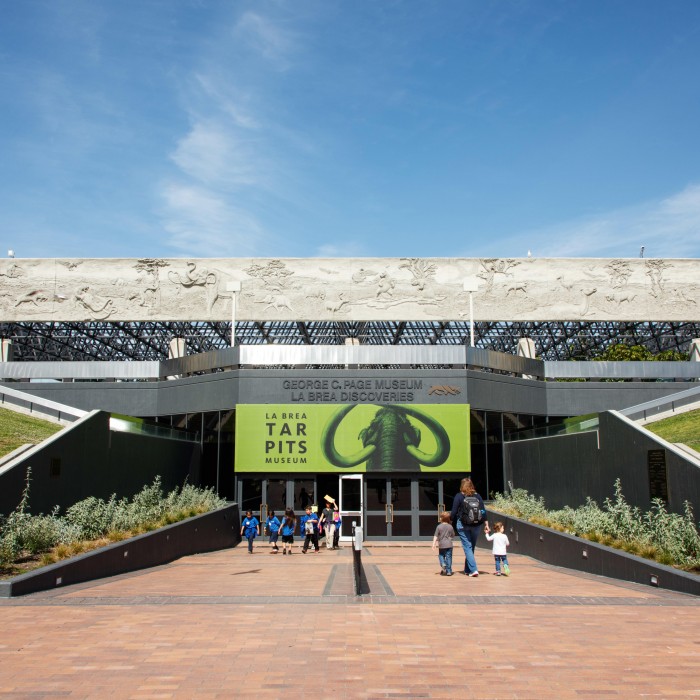
Right in the heart of L.A. sits the world’s most powerful gateway to the Ice Age. The asphalt seeps at La Brea Tar Pits are the only active urban fossil dig site in the world. Plants and animals from the last 50,000 years are discovered here every day. Outside, you can watch excavators carve fossils out of the asphalt. Inside the museum at La Brea Tar Pits (established in 1977 as the George C. Page Museum), our staff prepares these discoveries in the see-through Fossil Lab. You'll see the final result in our exhibitions: extraordinary saber-toothed cats, mammoths, dire wolves, and mastodons, as well as the tiny, but scientifically significant, microfossils of insects, plants, mammals, and reptiles. The Tar Pits help us understand life around Wilshire Boulevard long before we got here, and what lies ahead as climate and habitats continue to change.

A Hollywood legend. A cowboy. William S. Hart may have starred in 1920s silent films, but his lifestyle was anything but quiet—explore his 22-room mansion and 166-acre ranch and you’ll see why. At the William S. Hart Museum, visitors are invited to step into Hart’s wild, wonderful world, strolling through his eclectic home and belongings (dog bedroom included), greeting a herd of wild bison donated by Walt Disney, or hiking through the wildflowers of Hart Park.


Our Commitments
Part of our mission is to inspire responsibility for the natural world. Turning the dial down on the impacts of climate and habitat change means shifting our mindset to become aware of what we can do, as individuals and together, to build a more sustainable environment.
At NHMLAC, we are also committed to representing the diversity of Los Angeles County. Through our collective work with our staff, audiences, partners, and communities, we want to build an inclusive, welcoming network and institution by engaging in dynamic dialogue that transcends political, cultural, and social boundaries.
Statement on Climate Change
Statement on Evolution
Statement on Land Acknowledgement
Statement on NAGPRA Regulations on the Display of Native American Objects
Statement on Sustainability