Dinosaur Hall | Natural History Museum of Los Angeles

The Dinosaur Hall features many large-scale murals, including this one depicting the giant Mamenchisaurus. Illustration by Julius Csotonyi. Courtesy of NHM.
Follow us on FacebookFollow us on TwitterFollow us on FlickrFollow us on YouTube

Get Your Tickets Today!

The spectacular Dinosaur Hall is open. Get your tickets today!
Buy now

Dinosaur Hall Press Kit

Member of the media? Get all the details in our Dinosaur Hall Press Kit.
View PDF >

T. rex Growth Series Time Lapse!

Yes, that is Thomas and company getting installed in our new Dinosaur Hall. Check out this amazing time lapse on our YouTube channel! View more >

The Dinosaurs Have Arrived!

The new Dinosaur Hall opened July 2011. Watch the early preview for the hall and our other dino videos on our YouTube channel >


Dinosaur Hall Is Open

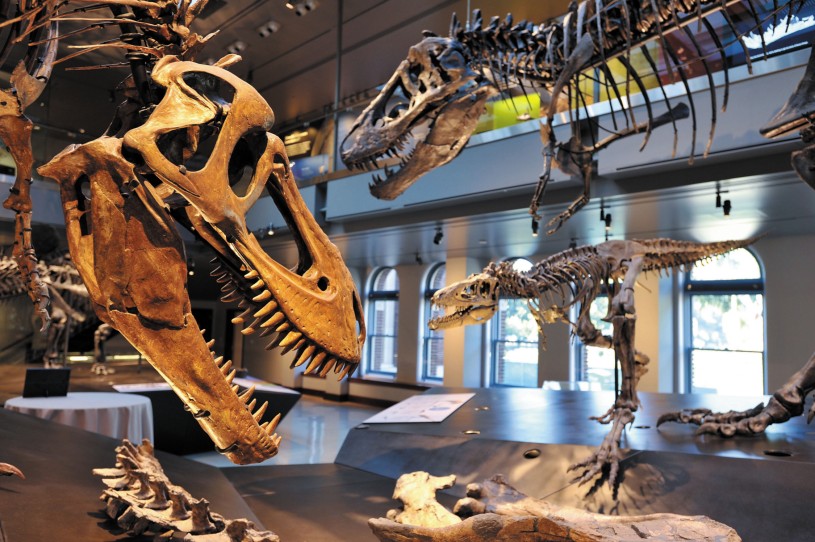
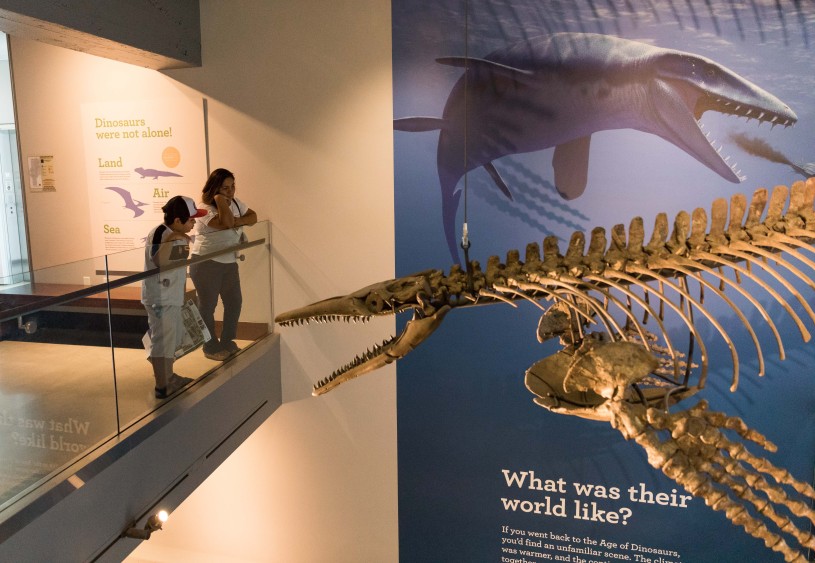
The all-new, 14,000-square-foot Dinosaur Hall is twice the size of the Museum’s old dinosaur galleries. It will rival the world’s leading dinosaur halls for the number of individual fossils displayed, the size and spectacular character of the major mounts, including the world’s only Tyrannosaurus rex growth series, and the way that paleontology comes alive! In these spacious, light-filled galleries, visitors will encounter science not as static information but as a vibrant, ongoing investigation into mysteries — some resolved and some still being explored.


The stunning centerpiece of this gallery is the Tyrannosaurus rex growth series, featuring a baby, juvenile, and sub-adult T. rex. It's the only series of its kind in the world.

  • Baby: About 2 years old when it died, this 11-foot long specimen is the youngest known T. rex fossil in world.  
  • Juvenile: At the young age of 13, this T. rex already measured more than 20 feet long and weighed about 4,000 pounds. A rare specimen, this fossil provides a crucial link in understanding the rapid growth of the T. rex. 
  • Thomas the T. rex: This never-before-seen fossil was excavated by NHM paleontologists in southeastern Montana from 2003-2005. It is estimated to be a 70% complete specimen, one of ten most complete T. rex specimens on Earth. At 17 years old, 34 feet long and nearly 7,000 pounds, this giant completes a series showing dramatic changes and rapid growth of T. rex. Mid-spurt, it’s estimated that a T. rex could gain 1,500 pounds in a year.


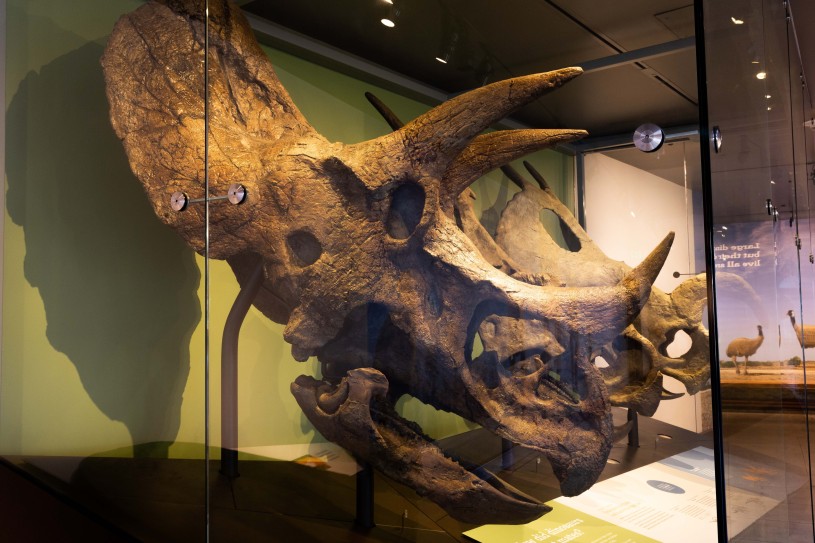
This imposing, never-before-displayed Triceratops greets visitors as they enter the exhibition at the start of Gallery 2.

  • It stands at approximately 25 feet long.
  • It is assembled from fossils discovered on four different Dinosaur Institute field expeditions to Montana and Wyoming from 2002-2006.
  • Triceratops is a late Cretaceous dinosaur, living around 66 million years ago.

Stegosaurus is an armored dinosaur with a back covered in large plates and with large spikes on its tail. This Stegosaurus is mounted fighting with the predator Allosaurus. Allosaur fossils have been found that show wounds from Stegosaurus spikes, which is why they’re posed the way they are in the Dinosaur Hall.

  • It was found in Utah.
  • It's around 150 million years old.

Dinosaur Hall Trailer