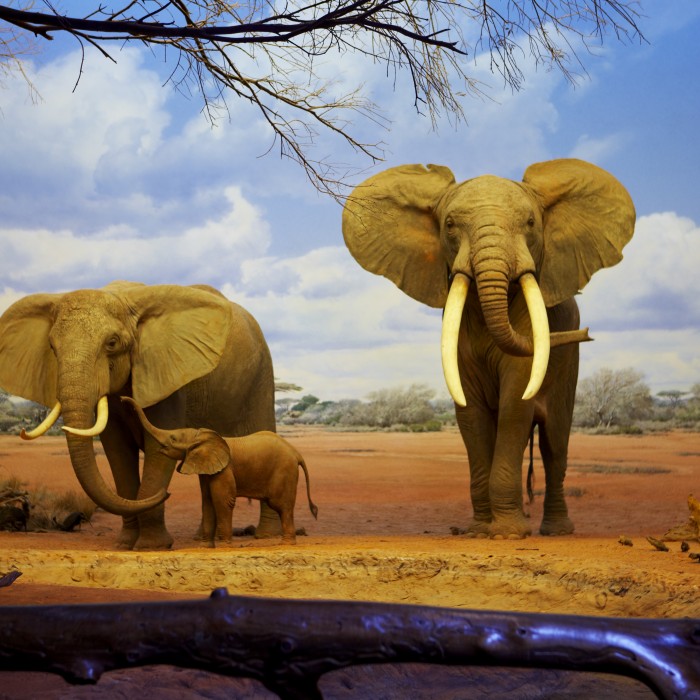
African Mammal Hall
Nature postcards in 3D

Our collections consist of 98,000 specimens—skins, skulls, skeletons, tanned hides, and fluid-preserved specimens of terrestrial and marine mammals. Our strengths include: bats, cetaceans, African ungulates, and local (Southern California) mammal species.
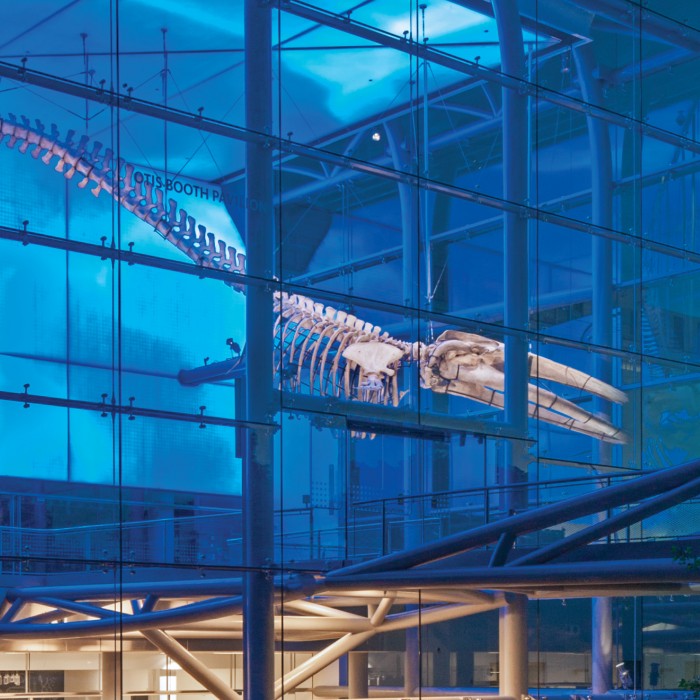
The size and scope of our collections make them important for the study of the origins and evolution of all the major groups of mammals. Our collections also document historical changes in marine and terrestrial biodiversity, both local and global. Among these documented changes are the effects of urbanization on mammal distribution. Our collection of marine mammal specimens is one of the largest in the world, with an emphasis on cetaceans from the eastern North Pacific and the Arctic Oceans. These marine mammals are of international significance and are an important resource for studying the life histories, distributions, and evolutionary relationships of whales and dolphins. Moreover, apex predators such as marine mammals are sentinels of ocean health, so our collections are used to monitor the effects of pollution and climate change on marine ecosystems.
Our mammalogy collections can be searched at VertNet, Global Biodiversity Information Facility, and iDigBio. Our institution code is LACM and our collection code is Mammals.
Museum collections form a vital component of Kayce's research on mammal and parasite diversity and distribution. She is interested in the processes that lead to new species and how host diversity impacts parasite evolution.
Dave Janiger is primarily responsible for responding to marine mammal strandings and curatorial work relating to the museum’s marine mammal collections.
Amanda works on projects in the terrestrial and marine mammal collections.
Shannen is a mammalogist from Utah with research interests in small mammals of the Western U.S. and comparative primate life histories. She oversees the care, management, and digitization of the museum's nearly 100,000 specimen mammal collection.
Priscilla is a National Science Foundation postdoctoral researcher working with Kayce Bell on relationships between hosts and the communities they harbor, including commensal microbes and parasites.
Jorge is a paleontologist and mammalogist who studies the evolution and diversification of marine mammals. As Curator of Marine Mammals, he works with NHM's mammalogy and vertebrate paleontology collections.
Questions? Contact us at mammalogy@nhm.org